Lying by omission hides the truth without saying anything false. Here is why it feels less like a lie and why it damages trust just the same.
Silence, half-truths, and what you never mention can do the same damage as a lie.
Lying by omission is deceiving someone by leaving out a fact they needed to understand the situation. Every sentence you say can be literally true, and the other person still walks away with the wrong picture.
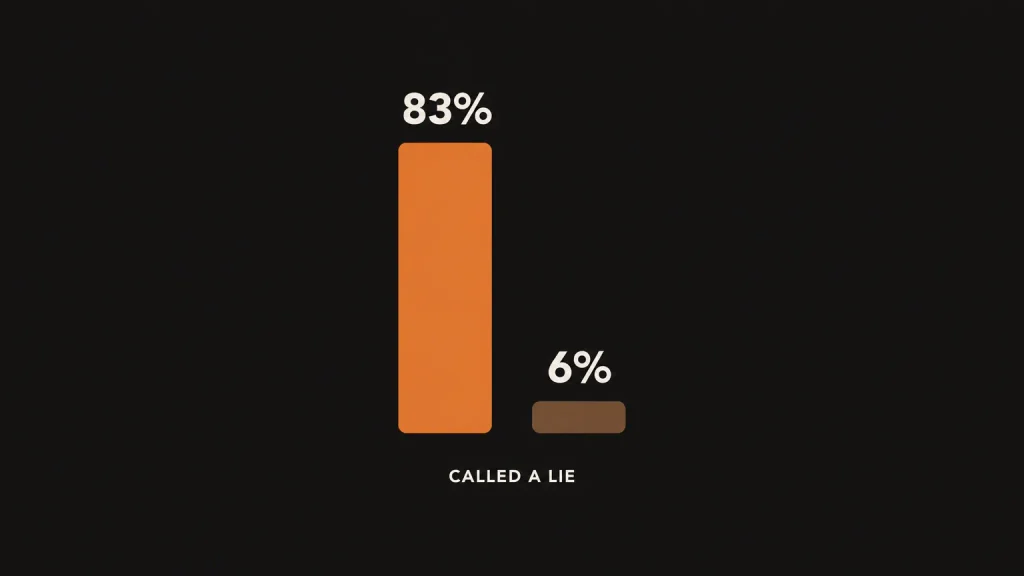
Most of us refuse to call it a lie, then punish it like one anyway. In one set of experiments, 83% of people called a false statement a lie but only 6% said the same about a withheld fact (Chernak et al.). Yet once the deception is exposed, research on misleading with the truth shows the deceiver is judged as harshly as an outright liar (APA).
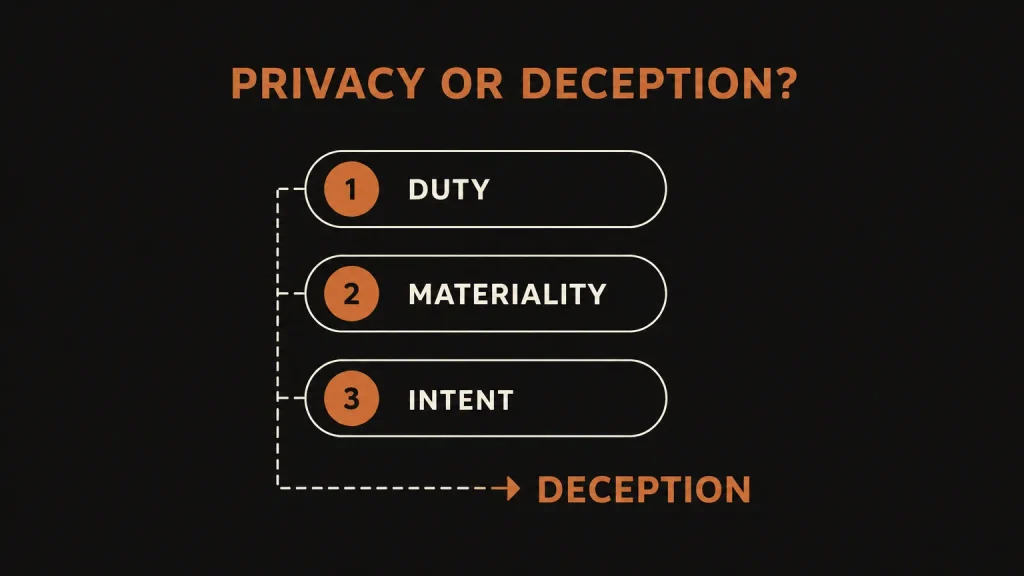
The difference comes down to duty. Silence tips from privacy into deception when you were responsible for the truth, the missing fact would have changed the other person’s decision, and you held it back on purpose. Criminal law draws the same line.
It is the engine of suspense fiction. From The Murder of Roger Ackroyd to reunion mysteries, the withheld fact is what keeps readers turning pages.
What helps: name the omission out loud, ask the question the silence was dodging, and decide whether you’re looking at privacy or a cover-up.
What “lying by omission” actually means
Lying by omission is deceiving someone by deliberately leaving out information that would change how they understand the situation. Psych Central frames it as “the deliberate act of leaving out important details so the truth is skewed or misrepresented,” and calls it the counterpart of lying by commission, where you use a false direct statement instead (Psych Central). Wikipedia’s entry on lying puts the same idea plainly: it happens “when an important fact is left out in order to foster a misconception,” and it even covers the failure to correct a false belief someone already holds (Wikipedia, “Lie”).
The strange part is that nothing you say has to be false. That is what makes it slippery to spot and uncomfortable to name. Here is how the four close cousins stack up:
A mystery letter arrives | Image Source: Pexels
Type of deception
What you actually do
A plain example
Lying by commission
You state something false.
“I was at work all night.”
Lying by omission
You leave out the one fact that matters.
“I went out with friends.” (You never say who.)
Paltering
You answer with a true statement that misdirects.
“I never lied about where I was.”
Half-truth
You give a technically accurate slice of the story.
“Nothing like that has ever happened before.”
All four get the listener to the same place: a wrong belief they did not choose. The label on the act matters less than that outcome, which is the thread this whole piece follows.
Why we resist calling a silence a lie
Ask people outright whether an omission is a “lie,” and most will say no. That is not a hunch; it is one of the most cleanly reproduced findings in the research on this topic.
Chernak, Dietrich, Raspopovic, and the two Turris ran five experiments on Amazon Mechanical Turk participants to test “whether lying by omission is conceptually possible, according to our ordinary, shared lying concept” (Chernak et al., Filozofia Nauki). The results split sharply:
When a person gave false information (a commission), 83% of participants attributed a lie.
When a person withheld information (an omission), only 6% did.
Why “Lie” Is a Word of Last Resort
In an earlier experiment in the same paper, a matched omission was called a lie by just 58% of people, which was not meaningfully different from a coin flip. The authors’ conclusion is blunt: people reach for the word “lie” for an omission only “for lack of a better word,” and “when provided more flexibility to express themselves, almost no one in our studies counted an omission as a lie” (Chernak et al.).
Philosophers have a reason for that instinct. Under the traditional definition, lying requires a statement, and staying silent is not making one. James Edwin Mahon’s entry in the Stanford Encyclopedia of Philosophy states the position directly: “So-called ‘lies of omission’… are not lies… All lies are lies of commission” (Mahon, SEP). But Mahon also records the dissent from Chisholm and Feehan: while lying may require an assertion, deception does not, and you can deceive “by omission,” by allowing someone to keep a false belief you could have corrected (Mahon, SEP).
Bar chart on black background showing 83% in orange vs 6% in brown, labeled “CALLED A LIE.”
Read those two facts together, and the practical takeaway is simple. Whether a silence is a “lie” is a fight about words. Whether it is deception is a question about whether someone ended up misled on purpose, and that is the one that affects real relationships.
The twist: we won’t call it a lie, but we punish it anyway
If people were consistent, you would expect the thing they refuse to call a lie to also be the thing they forgive. They do not. Two lines of research pull in opposite directions, and the gap between them is where most of the pain lives.
Start with the “punish it anyway” side. The American Psychological Association reported on a study by Todd Rogers and colleagues, published in the Journal of Personality and Social Psychology, covering two pilot studies and six experiments with over 1,750 participants (APA). In a negotiation setting, more than 50% of business executives in a Harvard Business School course admitted they had paltered, misled with statements that were technically true, in some or most of their negotiations. People said they preferred a palterer to a liar. But when the deception came out, “they were graded as harshly by their counterparts as if they had lied by commission” (APA). The clean truth you were hoping would protect you does not protect you at all once the other person sees the whole picture.
The “Go Easier on It” Side: Omission Bias
Now the “go easier on it” side. Psychologists have a name for the reflex that treats harm from inaction as milder than the same harm from action: omission bias. Baron and Ritov found that the minimum disease death rate needed to make people accept a vaccine was roughly ten times the death rate of the vaccine itself, which is to say people tolerated an awful lot of risk to avoid the sense that they had done something harmful (Wikipedia, “Omission bias”). Spranca, Minsk and Baron showed the same tilt in ordinary moral judgments across a range of scenarios, from a tennis match to a trolley problem (Wikipedia, “Omission bias”).
So the two findings sit side by side:
When asked to label the act, people mostly will not call an omission a lie.
When the act hurts them, they judge it about as harshly as a direct lie.
Why the Gap Is So Damaging in Practice
That mismatch is why lying by omission is so damaging in practice. The person doing it can tell themselves they never lied, because by the letter of the definition they may not have. The person on the other end feels the betrayal just the same.
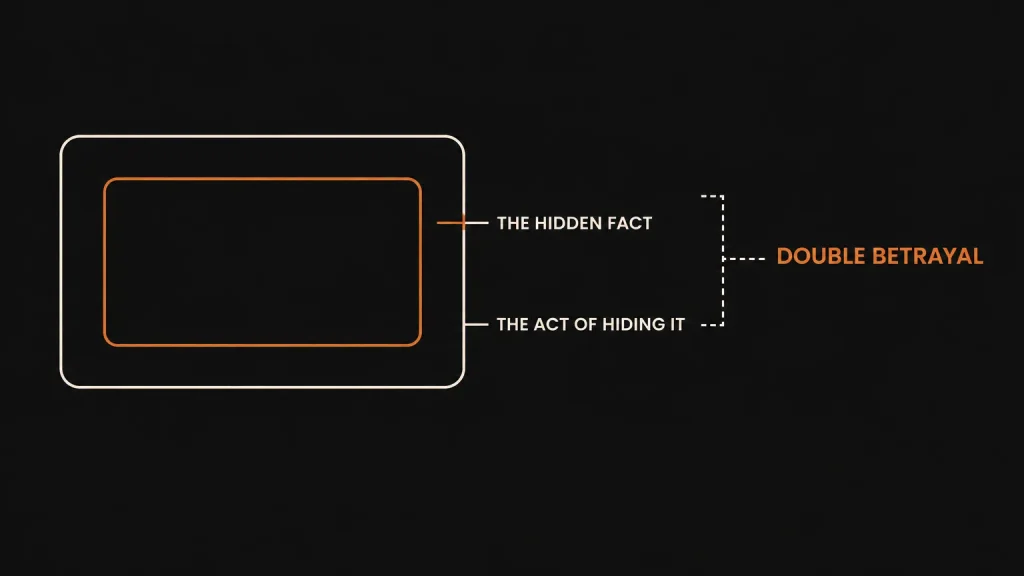
Clinicians see the fallout up close when friendship dynamics are strained by this kind of silence. Dr. Forrest Talley, a licensed clinical psychologist, puts the trust damage this way: “Trust suffers, and the person who was deceived will then be more cautious about accepting further disclosures as 100% truthful” (Psych Central). Lonestar Mental Health goes further, calling the discovery of an omission a double betrayal, both the hidden content and the act of hiding it, which “often feels more insidious than a direct lie because it makes people question everything they thought they knew” (Lonestar Mental Health).
Diagram showing the two layers of a double betrayal: the hidden fact and the act of concealment
If you have ever been on the receiving end and struggled to explain why it stung as much as a lie, that is why. You were not only misled about a fact. You were misled about a person.
Where silence crosses from privacy into deception
Here is the fair objection: not every omitted detail is a betrayal. Nobody owes everyone the full inventory of their life. Privacy is real, and a healthy person keeps some things to themselves. So where is the line?
Criminal law is surprisingly useful here, precisely because it has to define the line for a living. The general rule is that an omission only becomes a crime when the law imposes a duty to act, and the person breaches it; in the law of negligence, liability for an omission is imposed “only exceptionally,” where a duty of care exists (Omission (law), Wikipedia). A bare failure to act, watching the person drown in shallow water, traditionally carried no liability at all.
But the law also recognizes that silence can itself be deception. Under s15(4) of the Theft Act 1968, a deception “may be committed by what is not said or done” (Omission (law), Wikipedia). In R v Firth (1990), a defendant was caught because he failed to tell the NHS that the patients using NHS facilities were, in fact, private patients. He said nothing false. He simply did not correct the belief he was benefiting from, and that was enough.
The Three Questions That Decide It
Strip away the statutes and the same three questions decide whether silence is deception or just discretion:
Did you have a duty to disclose? A responsibility you signed up for, a role you hold, or a relationship where the other person is relying on you to tell them. Recall the second Chernak experiment: when an agent had agreed to be responsible for the information and stayed silent, 85% of people counted it a lie, but when the agent had refused responsibility, only 41% did (Chernak et al.). Duty is the hinge.
Would the missing fact have changed their decision? If knowing it would have altered what they agreed to, bought, or believed, you withheld something material, not something trivial.
Was the silence deliberate? A detail you simply forgot is not a lie. A fact you decided to keep back because sharing it was inconvenient is.
When all three point the same way, you are past privacy. You are deceiving someone with the truth, which is the hardest kind to catch.
Decision guide: three questions that separate privacy from deception
Why lying by omission is the engine of a good mystery
There is a reason this topic keeps showing up in suspense fiction, and not just as a theme. Lying by omission is the single most reliable trick a mystery writer has, because it lets a story hide something in plain sight.
TV Tropes, the catalog of storytelling devices, defines the move as “a statement that is clearly literally true but doesn’t give the whole truth, used instead of outright lying,” and the reason it works is exactly the reason it is hard to catch in real life: because nothing is false, there are “no inconsistencies to tip the audience/listener that a lie has been told” (TV Tropes). There is no contradiction for a clever reader to triangulate. The deception holds until the author decides to let it break.
From Agatha Christie to Knives Out
The archetype is Agatha Christie’s The Murder of Roger Ackroyd, where the narrator’s account of the case never lies but omits the one fact that would end the book on page one: that he is the murderer (TV Tropes). Knives Out runs the opposite version, a witness who is physically incapable of lying and so survives every interrogation by simply not volunteering the crucial detail. And in the wider genre, the move is everywhere: it is the same machinery behind why cover-ups drive suspense, the pull of secrets from the past, and the specific charge of a reunion mystery where people who knew each other as young meet again thirty years later, much like the challenge of how to reconnect with old friends—and find the old silence was not empty.
The craft connection runs deeper than plot mechanics. When a story is built on friendship and lies creating tension, the omission is what makes the characters feel real, because it is what people actually do to each other. Nobody wants to be the villain of their own life, so they tell the true story with one paragraph removed, and the reader watches the gap widen. That is also why these books are so addictive as thrillers: the reader is not chasing a clue; they are waiting to see when the people closest to the truth will finally say it.
The Goddesses Are Back
Murder At The Aphrodisia
A mystery by Renaii West
A lavish seaside reunion turns deadly. To catch a killer, the Goddesses
must confront secrets they thought were buried for good.
Lying by omission is hard to catch by design. There is no false sentence to point at, no alibi that collapses. What you can notice is the shape of the silence, and there is a practical set of moves for each side of it.
If you think someone is quietly withholding something:
Ask the specific question you have been avoiding. An omission survives on vagueness. “How was your night?” invites a true half-answer; “Who were you with, and was she there?” invites the fact you are missing. People who are concealing rarely invent an outright falsehood, so a direct question often pulls the truth loose.
Watch for the change of subject that always lands in the same place. Repeated deflection around one topic is a tell. The detail being skipped is usually the one that matters.
Name what you have noticed, without accusing. “You keep telling me about the trip but never about the meeting” is a cleaner opener than “what are you hiding?” It leaves room for the person to give you the missing paragraph rather than dig in.
If you are the one doing it:
Check it against the three questions above. Did you owe them the truth? Would it have changed their decision? Did you decide to leave it out? If yes to all three, you are not protecting anyone; you are managing the story.
Say the thing out loud, even late. An admission after the fact is not the same as never having concealed, but it stops the double betrayal from compounding. Dr. Sean Flannery traces the habit to “a conscious or subconscious decision that the relationship isn’t safe enough for authentic interaction,” which means the fix usually runs through the relationship’s safety, not just the missing fact (Psych Central).
Notice the mask you are wearing. Lying by omission often starts as a way to avoid one uncomfortable conversation and becomes a habit of presenting a smoothed-over version of yourself. That habit is corrosive on its own, because it means the affection you receive is given to the edited version (Psych Central).
The hardest cases are the ones tangled up in a friendship you have invested years in, where the omission protects a relationship you are afraid to lose.
Torn photograph of two smiling friends on a light wood table, symbolizing betrayal and broken trust
How to Handle Betrayal by a Friend
Those are worth working through rather than writing off, which is why it helps to read up on stages of friendship and what healthy closeness actually looks like, and to understand the difference between a genuine betrayal and the murkier territory of emotional cheating versus friendship when the lines have been blurred. If you are the one who was deceived, there is a practical path forward for handling betrayal by a friend: name the specific silence, say what it cost you, and decide from there whether trust can be rebuilt.
One last distinction worth holding onto. Lying by omission damages trust, and trust is what makes honesty feel safe in the first place. If the pattern runs the other way, if staying silent is how you protect yourself from someone who punishes you for the truth, then the problem is the relationship, not the omitted detail, and a therapist is a better guide than any article. This piece is about the ordinary version of the phenomenon, the everyday silence between people who mostly want to get it right.
Try Renaii West
If lying by omission is the engine of suspense, it stands to reason that the best stories are the ones where silence isn’t a plot device but a character’s whole personality. That is the territory Renaii West writes in. Her mystery Death by Chaos won the 2021 IndieReader Discovery Award for Women’s Issues, and her author page describes a writer who spent years directing theatre before turning to fiction about “quirky, unconventional characters who solve unexpected mysteries with wit.”
Her current novel, Murder at the Aphrodisia, takes the theme head-on. Three college friends, the Goddesses, reunite thirty years after a night that left one student dead and another missing, at a restored seaside mansion where the old secrets were supposed to stay buried. If you have read this far, you already know what the book is really about: not who did it, but what everyone has been carefully not saying since they were young.
The Goddesses Are Back
Murder At The Aphrodisia
A mystery by Renaii West
A lavish seaside reunion turns deadly. To catch a killer, the Goddesses
must confront secrets they thought were buried for good.
It depends on who you ask, and the honest answer is that the sources genuinely disagree. Under the traditional philosophical definition, lying requires a false statement, so staying silent does not count, which is the position James Edwin Mahon takes in the Stanford Encyclopedia of Philosophy. Most people share that instinct: in one experiment, 83% called a false statement a lie but only 6% said the same about a withheld fact. But silence can still be deception, and once it misleads someone on purpose and costs them, it lands like a lie whether the word fits or not. That gap is exactly what makes cover-ups so suspenseful in fiction.
How is lying by omission different from lying by commission?
Lying by commission is saying something you know to be false. Lying by omission is saying only what is true while leaving out the one fact that would change the other person’s understanding. Psych Central calls the omission the direct counterpart of commission, and notes that the words spoken can be entirely accurate. The practical difference is what makes omission so hard to catch: there is no false sentence to point at, only a gap. Paltering sits between them, misleading with statements that are technically true.
Why does lying by omission damage trust so much?
Because it becomes a double betrayal: the thing that was hidden, plus the act of hiding it. Lonestar Mental Health argues this often feels worse than a direct lie, since it makes a person question everything they thought they knew. Dr. Forrest Talley puts the aftermath simply: trust suffers, and the person who was deceived becomes more cautious about accepting any further claim at face value. Rebuilding from there takes time and a genuine change in how openly the two of you communicate, which is the work described in How to Handle Betrayal by a Friend.
Can silence ever be against the law?
Yes, when the law places a duty to disclose on you, and you breach it. The general rule is that a bare failure to act carries no liability, but criminal law recognizes that a deception can be committed by what is not said, and courts have convicted people who simply failed to correct a false belief they were profiting from. The wider pattern matters more than any single case: omission becomes a legal wrong once a duty to speak exists. That mirrors the everyday version, where you owe the whole truth to someone relying on you.
Why do mystery novels rely so much on lies of omission?
Because an omission contains no false statement, it leaves nothing for a reader to catch. There are no contradictions to triangulate, so the deception can hold until the story chooses to let it break. Agatha Christie built The Murder of Roger Ackroyd on exactly this, and it is the same machinery behind reunion mysteries where old friends meet again and the silence of the intervening years does the work. If you want a book to lose yourself in, browse our best suspense books.
The Goddesses Are Back
Murder At The Aphrodisia
A mystery by Renaii West
A lavish seaside reunion turns deadly. To catch a killer, the Goddesses
must confront secrets they thought were buried for good.
Storytelling has always been my passion. After earning a Bachelor of Fine Arts, I directed and taught drama, wrote stage productions, and brought stories to life. Now, I write quirky, unconventional characters who solve unexpected mysteries with wit. Beyond writing, I enjoy mythology, cinema, travel, dance, yoga, puzzles, and mysteries.