
Blogs
Why Cover-Ups Make Mystery Stories More Suspenseful
A character wipes the fingerprints off the table or burns the detailed diary. They tell a lie about where they were—hiding their true intentions or motives. The reader knows this, and they know that these things will come back to haunt the characters they’re reading about.
That’s the magic of a well-crafted cover-up mystery. The readers are aware, but they’re invested in learning the revelation—how the other characters will uncover the truth. The thrill of discovering whether the next chapter finally catches up to the culprit.
According to Writer’s Digest, the cover-up is often more significant than the crime because it is what hides the killer from detection. It’s the intricate detail of hiding the evidence that intrigues readers. Across genres and stories, what unifies villains is their act of concealing their deceitful nature or agenda. In other words, the crime is the spark, but the cover-up is the fire that keeps burning.
The Art of Suspense: Why Cover-Ups Hook Readers
There’s a reason why cover-ups are so effective at building suspense. When a character tries to keep a hidden crime concealed, they take difficult steps to achieve that. And the reader becomes a participant in the task, wanting to know the details and steps. More than that, readers anticipate when the reveal of the crime and punishment happens.
From another perspective, a straightforward murder investigation is a puzzle, but a cover-up mystery is a chess game. New complications happen as characters make their move, deliberate or not. The tension keeps readers entertained until the conclusion is near.
6 Reasons Cover-Ups Make Mysteries More Suspenseful
1. The Web of Lies Continues Growing
One lie leads to another, which leads to another, creating a loop that almost never ends. Before the character knows it, they’ve constructed an elaborate house of cards that could collapse at any moment. This creates a ticking clock effect—the reader knows it’s only a matter of time before everything falls apart.
However, the buried truth doesn’t stay hidden among bogus materials. As new ways of concealment are created, the opportunities for discovery also increase. Eventually, there’s no one else left to fool, and the truth is free.
2. The Guilt Factor Adds Emotional Depth
Characters who cover up crimes aren’t usually cold-blooded villains. They’re people who made a mistake, panicked, and chose the wrong path. This makes them relatable—and their guilt becomes another layer of suspense.
It’s important to note that these characters are different from criminals from other genres. Usually, criminals or killers with intense motives to bring chaos and death are dissimilar from characters in cover-up mysteries. The killers do not feel remorse for their crimes.
And so, suspicious secrets weigh on characters in visible ways. They become paranoid, jumpy, and unpredictable. Their relationships suffer. The reader watches them slowly unravel, wondering when—or if—they’ll break.
3. The Reader Becomes a Detective
Unlike a standard mystery where the reader follows the detective’s investigation, a cover-up mystery puts the reader in a unique position. They know something is being hidden. They’re watching for the clues that will expose the truth.
This is what makes a cover-up mystery so engaging. The reader is solving the crime and cover-up. They’re connecting dots that the characters hope will never be connected.
4. The Stakes Keep Rising
Every single time a new lie is told, the stakes increase. If the truth comes out, the consequences become more severe with each passing day. What started as a simple mistake becomes a felony. What began as a small deception becomes a conspiracy.
Concealed evidence creates a snowball effect. The longer the cover-up continues, the more people become involved, and the more damaging the eventual revelation becomes. And so, this escalation keeps readers hooked.
5. The Paranoia Creates Real Tension
When characters are hiding something, they become suspicious of everyone. Is that phone call a coincidence or a threat? Is that stranger following them? Is that friend really a friend?
This paranoia creates an atmosphere of constant tension. The sudden knock on the door becomes an invitation for terror. This level of dread is contagious, and the reader feels it too—they’re never quite sure who can be trusted or when the next shoe will drop.
6. The Moral Complexity Is Fascinating
Cover-ups force characters to make increasingly difficult moral choices. Do they protect themselves or the people they love? Do they keep lying or finally come clean? These dilemmas add depth to the story and make the characters feel real.
A mystery plot driven by a cover-up is rarely black and white. The reader may find themselves sympathizing with a character who’s doing terrible things—and that internal conflict makes the reading experience more compelling. In some cases, readers try to understand even when it’s wrong.

The Anatomy of a Perfect Cover-Up
So what makes a cover-up narrative or story truly memorable? Here are the key ingredients:
A believable motivation. The character needs a reason to hide the truth that the reader can understand, even if the reader doesn’t agree with it. This determination pushes the character to continue moving despite challenges.
Escalating stakes. Each attempt to conceal the crime should make things worse, not better. Time is running out; the characters need to make decisions.
Unforeseen complications. The best cover-ups are derailed by something the character never anticipated—a witness they didn’t know existed; a piece of evidence they couldn’t destroy.
A satisfying unraveling. When the truth comes out, it should feel inevitable. All those little details that seemed insignificant suddenly click into place. The words mean more than what they initially were thought of as.
Covering the Murder
Are you searching for your next cover-up mystery? Well, Renaii West‘s Murder at the Aphrodisia fits the bill perfectly. This incredible novel follows three college friends as they unite in a newly renovated mansion called Aphrodisia, which is owned by one of them. It was supposed to be a weekend celebration of happiness and grandeur when tragedy struck the party and a dead body showed up.
The cover-up in this novel is particularly compelling because it involves multiple characters with conflicting interests. Everyone has something to hide. Everyone has a motive for deception. The reader is left guessing not just who committed the crime, but who’s lying about what—and why.
Catch the killer and discover their motive; grab a copy of Murder at the Aphrodisia now!

Why Secrets from the Past Make Mystery Novels Unforgettable
When you’re reading a book and notice a passing comment that seems irrelevant, you sometimes pause and think: Is this information necessary?
At other times, when a character mentions something that happened decades ago, you just know it’s going to matter. This innocent detail about a past experience, though unnecessary, keeps the story moving and keeps readers entertained and thrilled by the prospect of discovering what it means.
The secrets from the past mystery formula hooks readers—making them come back for more dialogue, storylines, and information. Human beings have always been drawn to history’s mysteries. And so, it’s not complicated to see that mystery novels are appealing.
A good mystery with buried secrets delivers that dopamine hit repeatedly, keeping readers turning pages well past their bedtime. And when the novel ends, the readers start reading another head-turning book; the cycle continues.
The Past Is Never Really Past
There’s a reason why so many unforgettable mysteries hinge on old secrets. The past exerts a powerful and unsettling influence over the present. It shapes who characters are, what they fear, and what they’re willing to do to protect themselves. Basically, they are the wheels that keep the bus going.
So, when a mystery novel explores buried truths, it taps into something universal. Everyone has something they’d rather forget. Everyone has made choices they regret. Seeing characters confront their own histories creates an emotional connection that pure puzzle-solving alone cannot achieve. It redefines emotions that readers want to remember or forget, making them rethink their decisions or goals.
Additionally, the structure of these novels mirrors this idea. Dual timelines—alternating between past and present—have become increasingly popular in the genre. This technique allows readers to experience the weight of history while watching its consequences unfold in real time. It’s like watching a slow-motion car crash, except you’re desperate to see how it all fits together.
Why Readers Can’t Look Away
The psychological pull of a past mystery is powerful. When characters carry secrets from their youth, readers become invested in understanding not just what happened, but why it still matters.
Consider Agatha Christie’s masterpiece, And Then There Were None, which is an excellent example of the mystery novel genre. The novel’s premise is simple: ten people, each with a secret they’d like to keep hidden, are invited to an isolated mansion. One by one, they share the darkest secrets of their wicked pasts. And then, they die. The secrets aren’t just plot devices—they’re the engine that drives everything.
Similarly, Gillian Flynn’s Gone Girl offers a look at how secrets from the past affect the future. The novel’s shocking twists work because they’re built on layers of deception that stretch back years. In this situation, the past is a weapon that characters use against each other.

The Art of the Slow Reveal
What makes a hidden history mystery so compelling is the pacing. Unlike thrillers that race toward the climax, these stories invite readers to linger for the huge reveal—the final one. As each clue leads closer to the end, the discoveries feel earned.
This slow-burn approach builds something that fast-paced action often misses: atmosphere. The tension isn’t just about what happens next—it’s about what already happened and how it’s about to explode into the present.
The best authors in this subgenre understand that secrets are most powerful when they’re revealed piece by piece. A missing letter, a false identity, a discovered piece of jewelry, or a whispered conversation in the garden after midnight. These clues come together to reveal a big shock to readers.
When Friendship and Secrets Collide
Some of the most memorable mystery suspense novels explore what happens when secrets threaten to destroy the people who should trust each other most. Reunion mysteries, in particular, excel at this dynamic.
Renaii West’s Murder at the Aphrodisia is a perfect example. The story reunites three college friends—Tasha, Elizabeth, and Dawn—at Tasha’s newly restored beachfront mansion for what should be a celebratory weekend. But the friends have history, and history has a way of resurfacing.
Combining the history of the three friends and the secrets of the mansion, the novel sets out to create a mystery worth reading. What makes the book so effective is how West uses the past to shape every interaction. The characters have spent years, sometimes decades, trying to forget or bury what happened. But the truth will inevitably climb out to reveal itself.
The Comfort of Resolution
There’s another reason these stories resonate. In an unsettling world, mysteries bring comfort. They promise that order will be restored, that the truth will eventually come out, and that justice—in some form—will prevail.
This is especially true for secrets from the past mystery novels. The resolution isn’t just about catching a killer. It’s about finally understanding what happened all those years ago. It’s about closure.
Readers get the satisfaction of watching characters confront their demons and, often, find a way forward. The past may never fully release its grip, but understanding it can set people free.
Why People Keep Coming Back
Historical and past-secret mysteries offer the best of both worlds: the comfort of a time gone by and the suspense of a crime waiting to be solved. They let readers play detective in an era when finding the truth relied on sharp eyes, quick wits, and an ear for what was left unsaid.
The appeal goes beyond simple entertainment. These stories tap into something fundamental about human nature: the desire to understand, to make sense of the past, and to believe that the truth—no matter how painful—is worth pursuing.
A Mystery Novel For You
For readers craving a secrets from the past mystery that delivers on every level, Renaii West’s Murder at the Aphrodisia is an excellent choice. The novel weaves together past and present, exploring how old choices keep arriving at the front door wearing new costumes.
The book captures the joy of seeing old friends reunite while acknowledging that the past is always present until confronted and amended. It’s a story about loyalty, reinvention, and the strange way old choices keep shaping the present.
So, if you want an exciting read for your next holiday or weekend trip, grab a copy of Murder at the Aphrodisia today.

Reunion Mystery Fiction About Old Friends and Hidden Secrets
There’s something uniquely compelling, almost mesmerizing, about watching old friends gather after years apart. The hugs, the shared memories, the comfortable laughter, the slight teasing—and the uncomfortable silences when someone mentions something nobody wants to discuss. This is the magic of reunion mystery fiction, a subgenre that has captured readers’ imaginations and shows no signs of slowing down.
The appeal isn’t hard to understand. Readers love the combination of nostalgia and suspense; the way familiar faces can suddenly become strangers holding dangerous secrets. And right now, reading communities love mysteries with innovative storylines, distinct key points, and fresh ideas. So, this article discusses mystery fiction focused on old friends and hidden secrets and why it resonates with different readers.
Why Reunions Make Perfect Mystery Settings
Think about it. A reunion brings together people who share a history; whether that history is good or bad depends on each person’s interpretation. After years apart, each one has grown significantly; no one is the same. But some things remain the same for each one. They know things about each other—or think they do. The dynamic of old friends’ mystery storytelling allows authors to explore how time changes people and how the past never truly stays buried.
When a group of former friends gathers, the potential for conflict is enormous. There are old rivalries, unrequited loves, unanswered questions, and buried resentments simmering beneath the surface. Add a mysterious death to the mix, and everything is set for the perfect recipe for a page-turner.
Additionally, the setting often amplifies this growing tension among the friend group. A secluded mansion, a remote island, a snowed-in lodge, a cabin in the woods—these locations trap the characters together, forcing them to confront each other and their shared history. There’s nowhere to run, and nowhere to hide from the truth.
The Anatomy of a Reunion Mystery
Most reunion mysteries follow a recognizable pattern. A group of friends, often from college or high school, receives an invitation to gather after many years apart. In most cases, the host has an ulterior motive—usually connected to a death or betrayal from their shared past. As the weekend unfolds, secrets emerge, alliances shift, and someone ends up dead.
What makes these stories so effective is the way they explore secrets from the past. The characters have spent years, sometimes decades, trying to forget or bury what happened. But the past has a way of resurfacing, and when it does, the consequences can be deadly, painful, and overwhelmingly hard to recover from.
The theme of friendship and betrayal runs through every good reunion mystery. These stories ask difficult questions: How well do we really know the people we admire all these years? What would we forgive, and what would we never forget? Is it possible to truly move on from something terrible, or does the past always catch up with us?
Standout Examples in the Genre
Several recent books have demonstrated the power of this subgenre. One excellent example is Liza North’s The Weekend Guests, which follows five old college friends reuniting for a weekend at a beautiful house perched on a cliff above the sea. What most of the guests don’t know is that the host has called them together because someone has threatened to expose a dark crime they committed at university.
Another compelling entry is Margot Harrison’s The Midnight Club, which brings together a tight-knit group of college friends twenty-five years after the mysterious death of their friend Jennet. A mysterious invitation pulls them back to their Vermont college town, where their host provides them with an extraordinary method to relive the past. The more they question each other and dive into their own memories, the more they understand that their college memories were clouded.
Maria Hummel’s Goldenseal takes a different approach, focusing on two estranged friends who reunite after forty years to confront each other and the devastating betrayal that tore them apart. Set over the course of a single evening in a Los Angeles hotel, the novel takes on female friendship and loneliness.
And then there’s Whispers of the Lake by Shanora Williams, which explores a different kind of reunion—one where a woman returns to her hometown to investigate the disappearance of her former best friend, despite the devastating betrayal that ended their friendship years earlier. The story masterfully weaves together themes of broken trust, investigative journalism, and the haunting secrets that small towns harbor.

Murder at the Aphrodisia: A Fresh Take
Renaii West’s Murder at the Aphrodisia delivers everything readers love about reunion mystery fiction—and then some. The story reunites three college friends, Tasha, Elizabeth, and Dawn, at Tasha’s newly renovated mansion, a beachfront beauty. It was a celebratory weekend for Aphrodisia, the mansion overlooking the Pacific Ocean.
But as anyone familiar with these characters knows, chaos has a way of getting close to the main characters. Uninvited guests scheming with hidden agendas arrive at the house. Old secrets begin surfacing, breaking through the barriers. And when a body is found beneath the balcony—the same place where someone else had died years ago—the friends must confront not only the immediate mystery but also their own complicated histories.
Known from Renaii West’s other novel (Death by Chaos), the three Goddesses have weathered decades of challenges together, yet they still harbor secrets from each other. Their complicated narrative becomes more complex with new tribulations coming their way. As the investigation unfolds, the friends must decide whom to trust with their heart, what to reveal, and what to keep buried, hidden forever.
A Genre that Keeps on Giving
The popularity of reunion mystery fiction or hidden truths mystery makes perfect sense when considering current cultural trends. As the world feels more chaotic and disconnected, readers are drawn to wonderful stories that explore the enduring power of friendship—even when that friendship is tested by secrets and lies.
Moreover, the genre also offers a satisfying blend of nostalgia and suspense. And there’s something deeply appealing about revisiting a shared past while trying to solve a present-day mystery. So, if you’re looking for a book to read for your afternoon musings, Murder at the Aphrodisia is the best one for you. Grab a copy of this brilliant mystery book today.

What Makes a Mystery Thriller Novel So Addictive?
Maybe it’s the cliffhanger that caught your attention? Or is it the intrigue of discovering whether the culprit will strike again? The familiar feeling of wanting to just read one more chapter before going to bed—but it ends up being three more chapters and the sounds of birds chirping. Alas, it’s morning!
Many readers are familiar with the motions. So, what makes a mystery thriller novel so addictive? This question is quite difficult to answer, but the closest explanation would be looking at a combination of things: psychology, storytelling craft, and human nature.
The popularity of the genre speaks for itself. Here’s why. Data from Circana BookScan, analyzed in 2026, shows that thrillers and mysteries account for roughly one-eighth of all adult book sales across print and e-book formats. Additionally, psychological thrillers dominate the scene as demand for the said sub-genre is at 40%.
But the question remains: what exactly keeps readers coming back for more?
The Psychological Thrill of Controlled Fear
One of the primary reasons readers find themselves hooked on mystery thriller fiction is the safe exploration of fear. While readers can visualize the danger—the thrill of the ongoing chase, the narrative’s adrenaline rush, and the protagonist’s anxieties—they are not living that life. They’re exploring the situation without actually going through the difficult ordeal.
This is why the genre feels so addictive. As tension mounts, adrenaline floods the body, quickening the heartbeat and sharpening the senses. Then, as the moment passes, a soothing cascade of endorphins and dopamine follows. All the while, readers are comfortably anchored in their chairs, away from any real peril—making the entire experience deeply, guiltlessly pleasurable.
In a world that often feels chaotic and unruly at every turn, readers turn to stories where order can be restored. The promise of resolution—that someone will be caught and justice will be served—affirms a sense of order that reality often lacks.
The Delight of Solving the Puzzle
Another crucial element of the reader’s addiction is intellectual engagement. Good suspense novel writing transforms readers into active participants in the reading journey. Unlike other genres or subgenres, mysteries require readers to piece together clues, analyze suspects, and test theories. In a way, a reader is invited to be part of the “hunt.”
Additionally, the detective work provides mental stimulation that keeps the brain engaged. Human curiosity drives people to seek missing elements of a story, finding gratification when the information is finally revealed. And so, the uncertainty of not knowing the outcome actually promotes positive moods while reading, especially when readers anticipate a satisfying ending.
Escapism Without Real-World Consequences
Mystery novels provide an escape from daily stresses while allowing readers to experience dangerous situations without actually risking their safety, life, and well-being. So, a murder mystery novel invites readers to explore taboo topics like death and violence from a comfortably distant corner—their home, favorite coffee shops, or park.
The domestic thriller subgenre has become particularly popular among women. Author Julia Crouch, who coined the term “domestic noir,” characterizes it as a form rooted in familiar environments that adopts a fundamentally feminist perspective—one that views the home as a space fraught with challenges and even danger for those within it. In a way, readers see characters like themselves in situations they recognize, living vicariously through protagonists who make mistakes they could easily have made. Or they see someone they know living that reality.
The Power of Unpredictability
What makes a mystery thriller novel so addictive also involves the element of surprise. Unlike pure mysteries or pure horror, thriller storytelling can genuinely go anywhere. At one point, the protagonist might lose a comrade. Or the course of the story changes abruptly. In another situation, the killer might be human or something that defies explanation. Logic might triumph or fail spectacularly. This fundamental uncertainty keeps readers perpetually off-balance and deeply engaged.
The unpredictability creates a double hit of neurochemical rewards. Readers receive intellectual satisfaction from solving puzzles while simultaneously experiencing emotional release from confronting and surviving fear. It’s like two different pleasure centers firing at once. Hence, people become hooked on the feeling.

Exploring Darkness Safely
Crime fiction examines the complexities and intricacies of human behavior, discovering both the best and worst of humanity. Similarly, mystery or psychological thrillers also discuss the strange, irrational thinking of people. The taboo ideas, appalling intentions, and abominable thoughts are unleashed. Throughout the novels, these things are addressed and acknowledged as wrong.
Readers develop a dark curiosity about the unknown, drawn to situations they would never want to encounter in real life. This fascination with the darker aspects of human nature explains why true-crime podcasts and TV shows have exploded in popularity. In a way, it also helps viewers or readers notice the signs that would put them in danger.
Going back to books, the investment in the characters makes them particularly gripping. Readers need to simultaneously want characters to solve the mystery and desperately fear for their safety. This creates a powerful emotional connection that keeps the pages turning.
The Social Connection of Shared Suspense
Another dimension of the addiction that deserves attention is the social element. Mystery thrillers have become a shared cultural experience, with book clubs (physical or online), online forums, and social media groups dedicated to dissecting every twist and turn. The communal aspect of reading thrillers adds a layer of happiness that goes beyond the solitary reading experience. Discussing theories, debating suspects, and celebrating plot twists with fellow readers creates a sense of belonging and shared excitement that makes the experience even more rewarding.
This social dimension is particularly powerful in the digital age. Platforms like Goodreads, Facebook, Reddit, and TikTok have created vibrant communities where readers can share their reactions in real time. The anticipation of discussing a shocking ending with others provides additional motivation to finish a book quickly, creating a virtuous cycle of reading and engagement that reinforces the genre’s addictive nature.
Unlock a World of Mystery
For readers craving that addictive thrill, Renaii West’s Murder at the Aphrodisia delivers everything that makes mystery thriller fiction so compelling. The novel reunites three college friends at a newly restored beachfront mansion for what should be a celebratory weekend. But when a body is discovered, the friends must confront old secrets and new betrayals.
The book embodies everything addictive about the genre: the safe exploration of danger through beloved characters, the intellectual puzzle of piecing together clues, and the promise of eventual resolution. Grab a copy of Murder at the Aphrodisia by Renaii West today!

How Friendship and Lies Create Tension in Mystery Fiction
Picture this: two people who know each other’s deepest secrets, who have laughed together through countless nights and cried on each other’s shoulders. Now imagine one of them is lying. That’s the magic formula mystery writers have been using for generations to create page-turning suspense, and honestly, it works like a charm every single time.
The dynamic of friendship and lies forms the backbone of some of the most compelling mystery fiction ever written. It’s a deliciously uncomfortable combination—like watching your best friend slowly transform into someone you no longer recognize. This article explores why this particular narrative cocktail is so effective and how authors leverage it to keep readers up way past their bedtime.
Why Friendship Makes the Perfect Breeding Ground for Suspense
Friendship provides the ideal foundation for tension because it comes with built-in vulnerability. When characters are close, they share secrets, fears, and histories—moments that change the course of their lives. They’ve seen each other at their worst and best. And so, this intimacy means that when lies enter the picture, the stakes become significantly and painfully higher.
In many instances, readers become more emotionally invested in mysteries where the protagonist has a complicated relationship with someone close to them. But what’s the reason? It’s simple—betrayal from a stranger stings, but betrayal from a friend cuts deep, like the endless ocean pit.
The concept of hidden lies within a friend group creates a pressure cooker environment that mystery fiction thrives on. Every casual conversation becomes loaded with subtext. Every glance holds meaning. The reader finds themselves constantly questioning: “Does she know? Is he lying too?”
How Secrets Between Friends Fuel the Plot Engine
Secrets between friends are the fuel that keeps the mystery engine running. When characters are hiding something from each other, the reader becomes part of the investigation, trying to piece together what’s real and what’s manufactured.
Take Jessica Taylor’s Who We Were in the Dark, for example. The novel follows a group of teenagers whose friendship is built on deliberate falsehoods—they lie to each other to mask their personal struggles. When one of them disappears, the entire fragile structure collapses. Here, the mystery involves finding the missing person and unraveling layers of deception that the friends created to protect themselves.
This scenario works brilliantly because it mirrors real life. People often hide aspects of themselves—financial struggles, family problems, personal insecurities. Mystery fiction takes this universal experience and dials it up to eleven.

The Betrayal Factor: When Friendship Turns Toxic
Friendship betrayal amplifies tension exponentially. When a trusted friend becomes a suspect, or worse, a victim, the emotional stakes skyrocket. In this situation, the reader is witnessing the destruction of something precious and important.
Liz Lawson’s Murder Between Friends exemplifies this dynamic perfectly. The story centers around three childhood friends whose lives are torn apart when one testifies against the other’s brother in a murder case. Two years later, when the convicted brother is released pending a new trial, the characters must confront their fractured relationships and question everything they thought they knew.
This type of scenario creates emotional suspense that goes beyond simple whodunnit intrigue. Readers become invested in whether these friendships can survive, which makes the mystery itself more gripping.
The “Trust No One” Effect: Paranoia as a Storytelling Tool
When friendship and lies intersect, the resulting paranoia is a gift to mystery writers. Characters become suspicious of everyone, including themselves. This self-doubt creates a rich internal landscape that adds depth to the narrative.
Whispers of the Lake by Shanora Williams demonstrates this beautifully. Investigative journalist Rose discovers her husband in bed with her childhood best friend Eve—a betrayal that shatters a sixteen-year friendship. When Eve goes missing, Rose reluctantly agrees to investigate despite her anger and hurt. She’s torn between genuine concern and personal pain, crafting a compelling internal conflict that drives the entire narrative.
This tension between care and betrayal is what makes mystery fiction so addictive. Readers experience the protagonist’s conflict as their own.
Case Studies: Two Books That Master the Friendship-Lies Dynamic
Book Example 1: Secrets Between Friends by Tracy Buchanan
Set in the seaside town of Easthaven, this novel follows Liz Barrowman, a divorced mother fighting for custody of her daughters while living with her emotionally abusive mother. When her former best friend Tamsin returns to town, Liz hopes for reconciliation. However, she soon suspects something is deeply wrong—the woman claiming to be Tamsin seems completely different from the friend she once knew.
The novel alternates between the present and twenty years earlier, gradually revealing the shocking secret that bound the two friends together. The mystery isn’t just about identity theft; it’s about whether the friendship can survive the weight of hidden truth.
Book Example 2: A Friend Indeed by Elka Ray
This psychological thriller explores what happens when friendship is tested to its absolute limit. Single mother Jo Dykstra owes her job and new life in an affluent Pacific Northwest town to her childhood friend Dana McFarlane. So when Dana calls frantically for help, Jo rushes over—only to find Dana’s husband dead on the floor.
Dana admits to killing him following years of abuse, contrary to their picture-perfect relationship seen in public, and begs Jo to help dispose of the body. As the cover-up crumbles and a blackmailer threatens to expose them, truth and lies become increasingly tangled. The novel asks a haunting question: just how far would you go for a friend?
Why This Dynamic Resonates With Readers
The friendship-lies dynamic resonates with readers due to its deep connection with being human. Everyone has experienced a moment of doubt about someone close to them, or faced the uncomfortable realization that they’ve been less than honest with a friend.
This simple realization that nothing is perfect—some friendships are not built to last—relates to readers going through the same tumultuous relationships. The lies themselves add another layer. They’re rarely motivated by simple malice. Instead, they stem from fear, shame, or misplaced protection. This complexity makes characters feel authentic rather than cartoonishly evil.
Friendship and Lies in Murder at the Aphrodisia
The interplay of friendship and lies takes center stage in Renaii West‘s gripping mystery, Murder at the Aphrodisia. The story follows three college friends—Tasha, Elizabeth, and Dawn—who reunite at Tasha’s newly restored beachfront mansion for what should be a celebratory weekend. But secrets buried for decades begin surfacing, and when a body is discovered, the friends must decide whose version of the truth they believe.
The novel brilliantly showcases how friendship can both save and betray, how lies can protect and destroy. If you’ve been captivated by the mystery, intrigue, and complexity of the narrative, grab a copy of Murder at the Aphrodisia by Renaii West today.

What’s the Difference Between Horror and Thriller?
For any book lover who has ever stood in a bookstore, staring at two novels with equally intriguing covers and captivating stories, feeling utterly perplexed about which one to choose, this question is a familiar one. What’s the difference between horror and thriller?
These two popular genres often seem to blend together—in many stories and narratives—yet they serve distinctly different purposes for the reader. And so, this article aims to clarify the distinction by providing a comprehensive understanding of horror vs. thriller, exploring their unique conventions, and offering concrete examples to illustrate the contrast.
The confusion is understandable, as both genres are masters of creating intense emotional experiences. Similar to jumping into a cold pool in the middle of the night, carefree for the moment. The intensity is so overwhelming that describing it in one sentence is not enough. To differentiate between horror and thriller, readers have to look at the core intention of each genre. This analysis helps readers find that distinction.
Defining the Genres: Fear vs. Suspense
At its heart, the primary difference lies in the emotion each genre seeks to evoke. Thriller fiction aims to generate feelings of suspense, excitement, and anxiety, keeping the reader on the edge of their seat—always contemplating the next part. A thriller’s goal is to create a relentless, heart-pounding experience in which the protagonist faces high-stakes problems, often against the clock. Horror fiction, conversely, intends to inspire fear, dread, shock, and even revulsion, tapping into deep-seated primal anxieties.
Additionally, one should also look at the threat presented. Thrillers typically ground their peril in realistic, plausible scenarios—a serial killer on the loose, a political conspiracy that can change the world, the kidnapping of a sibling or offspring. Horror, on the other hand, often introduces elements of the fantastical and supernatural—ghosts, monsters, demons, vampires, or other terrifying phenomena that defy the laws of nature. However, it is important to note that non-supernatural horror also exists, showing that the essential difference lies not solely in the presence of monsters but in the intent behind the narrative.
The Narrative Perspective and Character Arcs
Another distinguishing factor between horror and thriller is the narrative perspective and the development of characters. A key element of psychological tension in thrillers often lies in a shared perspective, drawing the reader into the protagonist’s mind as they race against time to solve a puzzle, discover the killer, or prevent a catastrophe. The reader is often aware of the threat, but the protagonist’s journey is to uncover the truth and survive.
In horror, the reader is more frequently placed in the perspective of the victim, generating those intense feelings of fear and helplessness. The antagonist in horror is often a mysterious, unknowable force of evil, whereas in a thriller, the villain may be a more developed, albeit menacing, character whose motives and identity are part of the mystery to be solved.
Furthermore, the structure is significantly different. Thriller fiction is often defined by unpredictability, employing plot twists, red herrings, and cliffhangers to keep the reader guessing. While horror can be more formulaic, this predictability does not diminish its power; the reader knows something terrible will happen, and the craft lies in the slow, agonizing build-up to that inevitable moment.

Book Examples: The Tangled Webs of the Thriller Genre
1. Gone Girl by Gillian Flynn
This quintessential psychological thriller focuses on the disappearance of Amy Dunne. The narrative is a masterclass in suspense, manipulation, and the slow unraveling of a marriage. The reader is kept on edge as the story shifts perspectives, revealing that the central risk is a very real, human one: deceit and psychological warfare.
2. The Girl with the Dragon Tattoo by Stieg Larsson
This novel is a prime example of a crime thriller, interwoven with political and corporate corruption. The danger is grounded in reality—a decades-old mystery involving a powerful, wealthy family. The protagonist is a journalist investigating the case, and the narrative is propelled by his quest for answers and the high-stakes risks he encounters.
3. The Silent Patient by Alex Michaelides
A gripping psychological thriller about a psychotherapist’s obsession with uncovering why a famous painter allegedly shot her husband and then became mute. The suspense builds through the pursuit of a disturbing truth, playing on the fragility of trust and the darkness within the human psyche.
Book Examples: The Frightful Claws of the Horror Genre
1. The Haunting of Hill House by Shirley Jackson
A foundational text in supernatural horror, this novel follows a group of people investigating a notoriously haunted mansion. The source of fear is the house itself, an entity that preys on the characters’ psychological vulnerabilities. The goal is to evoke a pervasive sense of dread and terror through its atmosphere and psychological tension.
2. The Shining by Stephen King
This brilliant novel is a masterclass in both psychological horror and supernatural dread. While it features themes that could be considered psychological, the elements of the fantastical—the haunted hotel, its malevolent spirits, and the telepathic abilities of the boy—push it firmly into horror territory. The reader is placed in a state of terror, feeling the isolation and the slow, inexorable descent into madness and violence.
3. IT by Stephen King
Another classic horror novel, IT features a terrifying shape-shifting entity that manifests as the reader’s deepest fears. This taps directly into primal fears and uses grotesque and shocking imagery. The monster is an unnatural, cosmic evil, and the narrative focuses on the intense, visceral fear it instills in its victims.
Discovering Murder at the Aphrodisia
Understanding the difference between horror and thriller is essential for readers looking for a specific experience. For example, Murder at the Aphrodisia by Renaii West is a story that beautifully marries elements of both genres. The chaotic weekend at the glamorous beach house is a classic thriller setup, filled with suspense, mystery, and high-stakes danger as the protagonist and her friends find themselves entangled in a murder investigation.
Yet, the story also possesses moments of true horror: the shock of discovering a body, the mounting dread of a suspicious stalker, and the visceral, life-or-death confrontation in the final chapters. This novel is a perfect case study in how the genres can overlap, providing the thrilling suspense of a crime puzzle while delivering moments of genuine terror. It is a testament to the power of the hybrid narrative, reminding readers that the most gripping stories often draw from a range of emotional and narrative traditions, skillfully blending the edge-of-your-seat tension of a thriller with the primal fear of horror.
Knowing What to Expect
Ultimately, the question “What’s the difference between horror and thriller?” can be answered by identifying the core emotional experience the reader is seeking. Horror aims to terrify, to provoke a deep-seated sense of dread and unease. Thriller fiction aims to excite and thrill, keeping the reader in a state of high anxiety and anticipation.
If you’re seeking a brilliant novel to start your reading journey, Murder at the Aphrodisia by Renaii West is the best one on the list. Grab a copy of Murder at the Aphrodisia today.

IDRA Press Release
DEATH BY CHAOS
WINS 2021 INDIEREADER DISCOVERY AWARD FOR WOMEN’S ISSUES
JUNE, 3, 2021, – On Thursday June 3rd, IndieReader, one of the original review services for self, hybrid and independently published authors, announced the winners of the tenth annual IR Discovery Awards (IRDAs) for 2021. Death by Chaos by Renaii West won in the Women’s Issues category.
IndieReader launched the IRDAs in 2011 to help notable indie authors receive the attention of top publishing professionals, with the goal of reaching more readers. Noted Amy Edelman, author and founder of IR, “The books that won the IRDAs this year are not simply great indie books; they are great books, period. We hope that our efforts via the IRDAs ensure that they receive attention from the people who matter most. Potential readers.”
Past and present sponsors for the IRDAs include Amazon, Reedsy, Smith Publicity and NY-based literary agents Dystel, Goderich & Bourret. Judges have included publishers (from Penguin Group USA and Simon & Schuster), agents (from ICM, Dystel), publicists (from Smith Publicity), and bloggers (from GoodeReader).
Renaii West’s fast-paced novel is a unique, compelling mix of upbeat female characters, women’s issues and a grisly mystery. Death by Chaos is available through Amazon.
“I am honored by this recognition and award. I am thankful for the assistance and support IndieReader provides independent authors.” Renaii West.

Apple of Discord
For the wedding of sea nymph, Thetis and mortal, Peleus, Zeus planned a festive celebration and invited all the gods and goddesses of Olympus—except for one—the goddess of discord and chaos herself, Eris, because—well she always brought discord and chaos.
But the resourceful and intelligent Eris learned of the feast, and did not take the snub lightly. Not only did she ignore the snub and crashed the event, but, for fun and revenge, she tossed a golden apple inscribed “for the fairest” into the crowd.
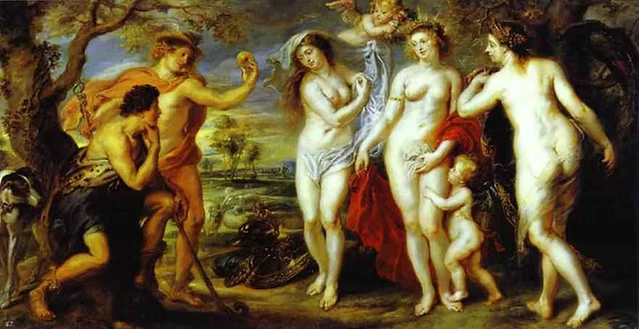
The apple was immediately claimed by three goddesses: Aphrodite, the goddess of beauty; Athena, the goddess of wisdom and war; and Hera, Zeus’ wife, Queen of the gods. After a bit of tug of war, the three turned to Zeus to resolve the argument.
Zeus, being no fool, declined to answer and selected a shepherd in the city of Troy, named Paris, to do the task.
For this beauty pageant each goddess brought her A game and a bribe.
Hera offered him to make him king of Europe and Asia, making him one of the most powerful men on earth.
Athena promised him ultimate wisdom and the best warrior skills.
And last but not least, Aphrodite promised him the love and affection of Helen of Sparta, wife of King Menelaus, who was considered the most beautiful mortal woman in the world.
Paris, being a young man, chose Aphrodite’s gift and bestowed the apple and title to her.
Aphrodite then showed her appreciation by helping Paris raid the Spartan palace and taking Helen with him back to Troy.
The moment King Menelaus discovered his queen was gone, he called upon all her former suitors and fellow kings to attack Troy and bring Helen back to Troy. Thus the Trojan War began—all because of hurt feelings and a tantrum.